Norway has no digital nomad visa. The Residence Permit for Self-Employed Persons recorded here is the nearest route, but it is a different kind of permit and does not cover remote work for an employer or clients abroad. It is kept for reference so the question can be answered; see the active programmes in the same region to compare real options.
Active alternatives in Europe: Albania, Andorra, Bulgaria · Browse all active visas
Norway Digital Nomad Visa
Residence Permit for Self-Employed Persons
Overview
Nomad Score
Our unique composite ratingFees, processing, online application
Duration, renewability, family
Foreign income may be taxed
Safety, healthcare, development
Internet, English, tap water
Nomad Score is calculated from visa accessibility, stay flexibility, tax benefits, living quality (UNDP, UNODC, WHO data), and digital infrastructure. Updated 2026-11-20.
Visa Requirements
Financials
- Income Proof
UDI requires an income of at least NOK 341,373 a year before tax for self-employed persons with a company in Norway, equal to 2.5 times the national insurance basic amount. The figure is revised every May.
- Income Type
At least NOK 341,373 a year in pre-tax business income, set at 2.5 times the national insurance basic amount (grunnbeløpet), which was NOK 136,549 from 1 May 2026 and is revised each May. The figure belongs to UDI's category for self-employed persons running a business in Norway.
Background & Health
- Health Insurance Required
- Background Check Required
- Minimum Age 18+ years old
Advantages
- • World-class quality of life and safety
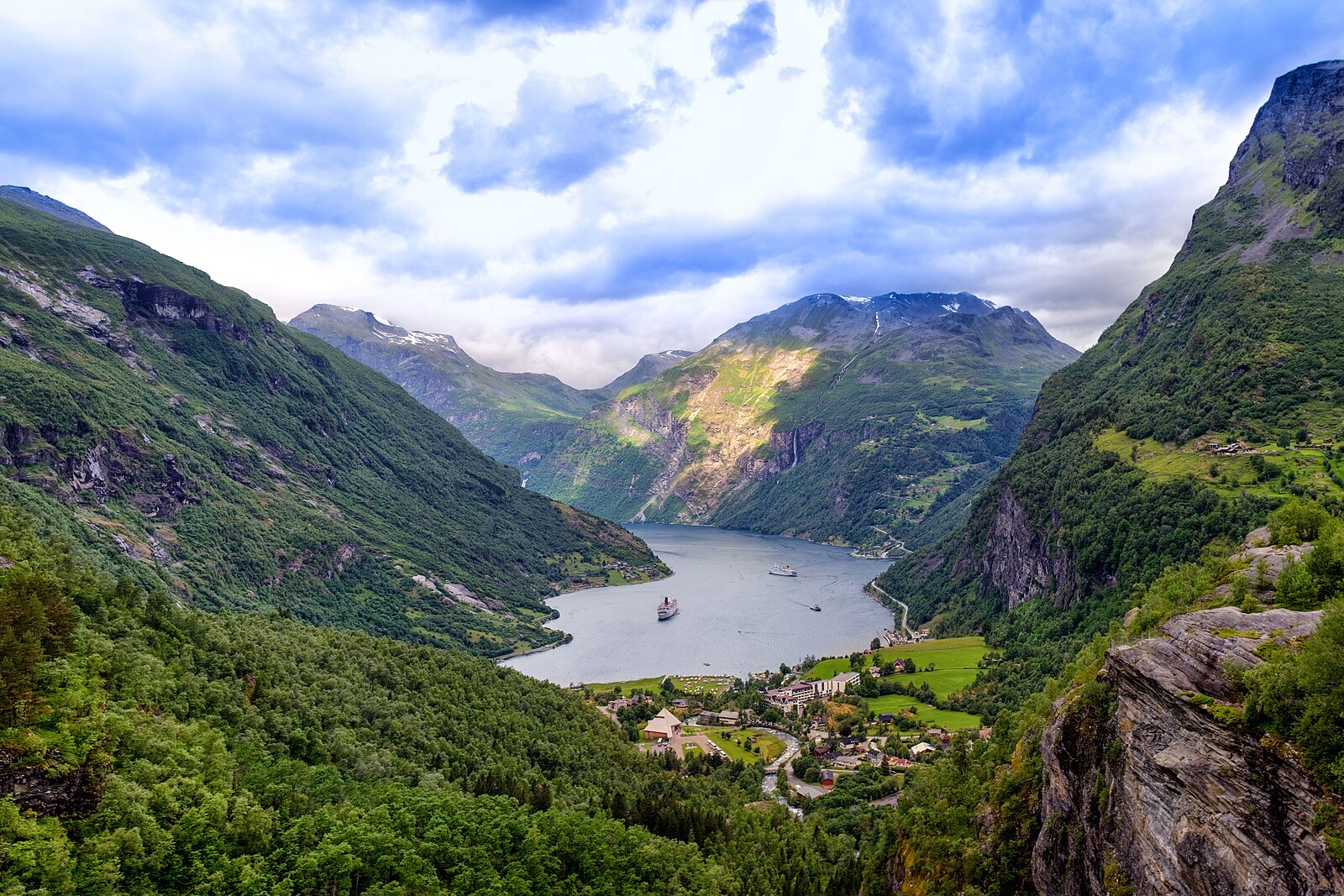
- • Spectacular natural beauty - fjords, mountains, northern lights
- • Excellent infrastructure and internet
- • Very high English proficiency
- • Strong social safety net and public services
- • Pathway to permanent residency
- • Pathway to citizenship after 7 years
- • Dependants can join — Spouse and children can apply for family immigration permits
- • Clean environment and outdoor lifestyle
- • Stable economy and government
Disadvantages
- • Not a remote-work route at all — UDI states you may only work in your own Norwegian business and may not take other work, including remote work
- • Very high cost of living - among world's most expensive
- • High taxes (22-38% on worldwide income)
- • High application fee ($600)
- • Long processing time (60-90 days)
- • Background check required
- • Dark winters (minimal daylight November-February)
- • Weather can be harsh and rainy
- • Relatively small expat/nomad community
- • Norwegian language helpful for integration
- • Expensive alcohol (high taxes)
Tax & Legal
Foreign Income
Norway may tax global income after you become a tax resident (typically 183 days).
22% minimum tax + progressive rates up to 38%
Local Income
Income earned from local Norway sources is taxable at standard rates.
Norway taxes worldwide income for tax residents. Tax residency begins after 183 days in a 12-month period. Norway has among Europe's highest tax rates but excellent public services.
Living in Norway
All ratings use a unified A–D scale. A = best for digital nomads in each category.
Expensive
Numbeo Cost of Living Index: 80/100 (NYC=100, lower=cheaper)
Very Safe
UNODC Homicide Rate: 0.5/100k population
Excellent Coverage
WHO Universal Health Coverage Index: 86/100
Excellent for Remote Work
Ookla Speedtest: 169 Mbps median download
Very High Development
UNDP Human Development Index: 0.968
Subarctic to temperate — mild coast (Gulf Stream), very cold inland. Midnight sun in summer
WHO/UNICEF JMP
Widely spoken
Climate classification
Sources: UNDP HDR 2025 · UNODC Homicide Data · WHO UHC 2023 · Numbeo · Ookla · WHO/UNICEF JMP. Updated 2026-08.
Common Questions
Does Norway have a digital nomad visa?
What does it cost to apply for the Residence Permit for Self-Employed Persons?
Is the Norway income requirement monthly or annual?
How long can I actually stay in Norway?
Does the Residence Permit for Self-Employed Persons cover a spouse and children?
Does Norway tax my foreign income while I am on this visa?
What is the special tax regime in Norway?
Does time in Norway use up my Schengen 90/180 days?
Can this route eventually lead to a Norway passport?
Where to Live & Work
Oslo
Capital and largest city. Best infrastructure, coworking scene, and international community. Major tech hub.
Popular Neighborhoods
Grünerløkka
Trendy, artistic, cafes, young professionals
Best for: Solo nomads who want vibrant social scene
Majorstuen
Upscale residential, central, good transport
Best for: Professionals seeking quality and convenience
Frogner
Wealthy, quiet, family-friendly, near parks
Best for: Families with higher budgets
Coworking Spaces
Premium space with great community
Startup-focused coworking
Multiple locations across Oslo
Local Tips
- ● Public transport is excellent and expensive - monthly pass $100+
- ● Many cafes welcome remote workers but buy drinks regularly
- ● Nature is close - forests and Oslo fjord within city limits
- ● Winter activities like skiing are huge part of culture
Bergen
Second largest city, beautiful coastal setting, less expensive than Oslo, surrounded by fjords and mountains.
Popular Neighborhoods
Bryggen/Downtown
Historic waterfront, tourist area, walkable
Best for: Those who want charm and central location
Fana
Suburban, residential, family-friendly
Best for: Families seeking space and nature
Coworking Spaces
Active startup community
Modern coworking in city center
Local Tips
- ● Bergen is rainier than Oslo - expect frequent rain year-round
- ● Gateway to famous Norwegian fjords
- ● Smaller international community than Oslo but charming
Trondheim
Third largest city, university town, tech hub, more affordable than Oslo/Bergen, vibrant student life.
Popular Neighborhoods
Midtbyen (Center)
Historic, walkable, student-friendly
Best for: Young nomads seeking affordability and community
Coworking Spaces
University-affiliated startup space
Local Tips
- ● Smaller city feel but good tech scene
- ● Even darker winters than Oslo due to northern location
- ● Most affordable of Norway's major cities
General Tips for Norway
- ● Norway is extremely expensive - budget $2,800-4,200/month minimum
- ● Alcohol is sold only at government Vinmonopolet stores with limited hours
- ● "Everyman's Right" (allemannsretten) allows free access to nature for camping/hiking
- ● Norwegians value outdoor activities - hiking, skiing, cycling are lifestyle
- ● Work-life balance is taken seriously - offices empty by 4-5pm
- ● English is nearly universal - even government services available in English
- ● Winter darkness is significant - invest in vitamin D and light therapy
Prices are approximate and based on publicly available data as of 2026-04. Actual costs vary by individual circumstances and market conditions.
After You Arrive
D-number / Fødselsnummer
Critical - required for banking, housing contracts, healthcare, and daily life
Bank Account
Can open: Yes
Recommended: DNB, Nordea, Sparebank 1
Alternatives: Wise and Revolut work but Norwegian bank account needed for many services
Housing Search
Main platforms: Finn.no (main platform), Hybel.no, Facebook groups
- • Competition is fierce in Oslo
- • Deposits typically 3 months rent
- • Furnished apartments less common
- • Landlords prefer long-term tenants
What Nobody Tells You
Norway's oil wealth funds the world's best social safety net. Healthcare, education, and infrastructure are exceptional, funded by sovereign wealth fund.
D-number is essential. Get your D-number (temporary ID for foreigners) immediately - it unlocks banking, housing contracts, and all services.
The housing market is tight. Finding apartments in Oslo is competitive. Start searching early and be prepared to move quickly when you find something suitable.
Norwegians take outdoor life seriously. The concept of friluftsliv (outdoor life) is central to Norwegian culture. Hiking gear and outdoor clothing are essentials, not luxuries.
The darkness is real but manageable. Oslo gets only 6 hours of daylight in December. Vitamin D supplements, light therapy lamps, and embracing winter activities help significantly.
Norway's average monthly salary is around $5,800, so the visa requirement (~$2,420/month minimum) is just 42% of local wages - but costs are high enough that you'll need significantly more to live comfortably.
Alcohol and dining are extremely expensive. A beer at a bar costs $10-12, a restaurant meal $25-40. Many locals pre-drink (vorspiel) at home before going out.
Public transport is excellent but expensive. Oslo monthly pass costs $100+. However, cycling infrastructure is world-class and many bike year-round.
Income in Context
Visa Requirement
$2,937/mo
Local Average Wage
$5,800/mo
Living Costs
The income requirement is only 42% of the Norwegian average wage - the minimum bar. To live comfortably, you'll need $3,500-5,000/month. Rent takes $1,200-1,800, groceries are expensive, and dining out is premium. Norway is one of world's most expensive countries.
Norway consistently ranks among the world's most expensive countries, particularly for alcohol, dining out, and services. However, public services and infrastructure are exceptional.